Five hundred years ago, Ignatius and his companions decided to travel to Jerusalem. They made travel plans, envisioning a future filled with cheerful and holy dreams – all for the greater glory of God. God, however, had something else in mind: delayed ships and a context of war prevented these men from sailing. They found themselves in Rome instead and, discerning together what to do, offered their failed plans and holy dreams to the Pope. Thus was born the Society of Jesus as we know it.
Something similar happened last week with JECSE’s Education Commission, the network of European Delegates for Education. Facing delayed planes, rerouted flights, snowstorms, and geopolitical uncertainties, we actually made it to Vilnius, in Lithuania. Compared to Ignatius’s journey, we could call it a win! Yet after a week of deep reflection and discernment about what our common future might look like, we are sure of only one thing: we don’t know what the future holds. This is not to be feared, but cherished as sacred space for God’s grace to act.
Gathering in Vilnius
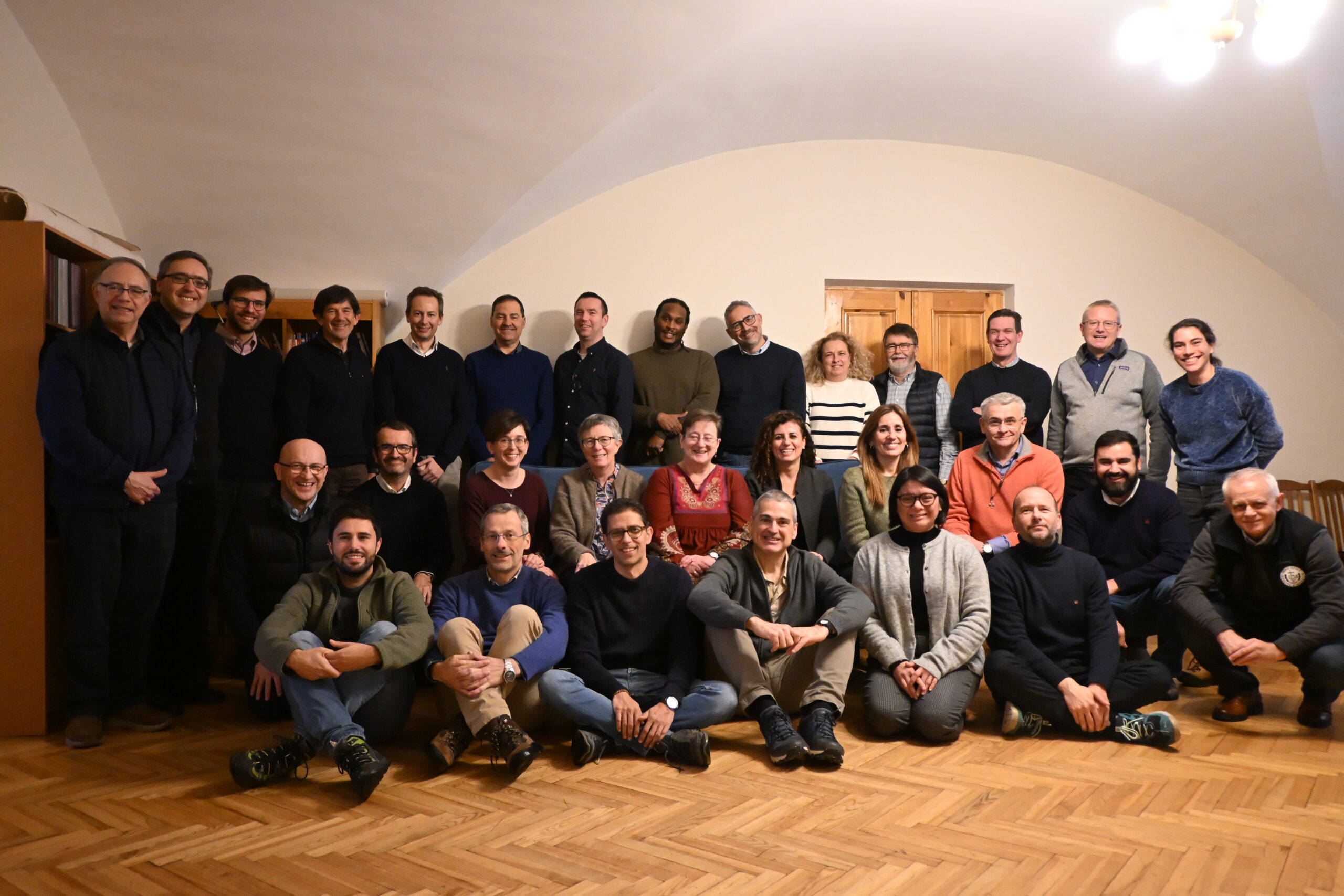
From November 24-28, thirty delegates, network coordinators, JECSE friends, and mission partners gathered to discuss the future of Jesuit education in Europe, our network, and our schools across different Provinces and contexts.
Settling in, warming bodies, hearts and minds, the first afternoon offered us the time to stop and realize where we are now. What have we been doing this past year, locally and as a network? How aligned is our work with the Society of Jesus’s priorities for education? Reflecting on this, do we sense consolation or desolation?
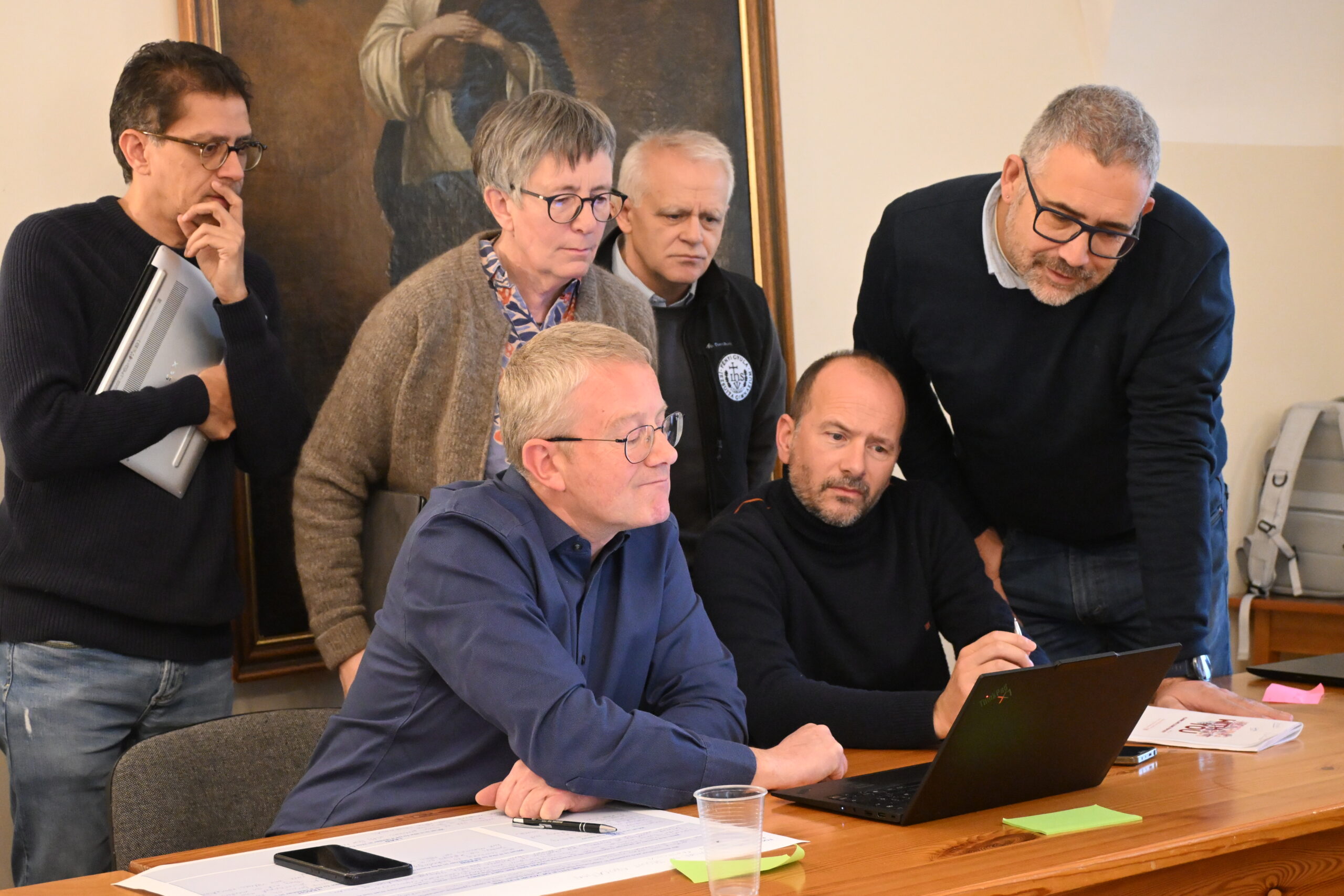
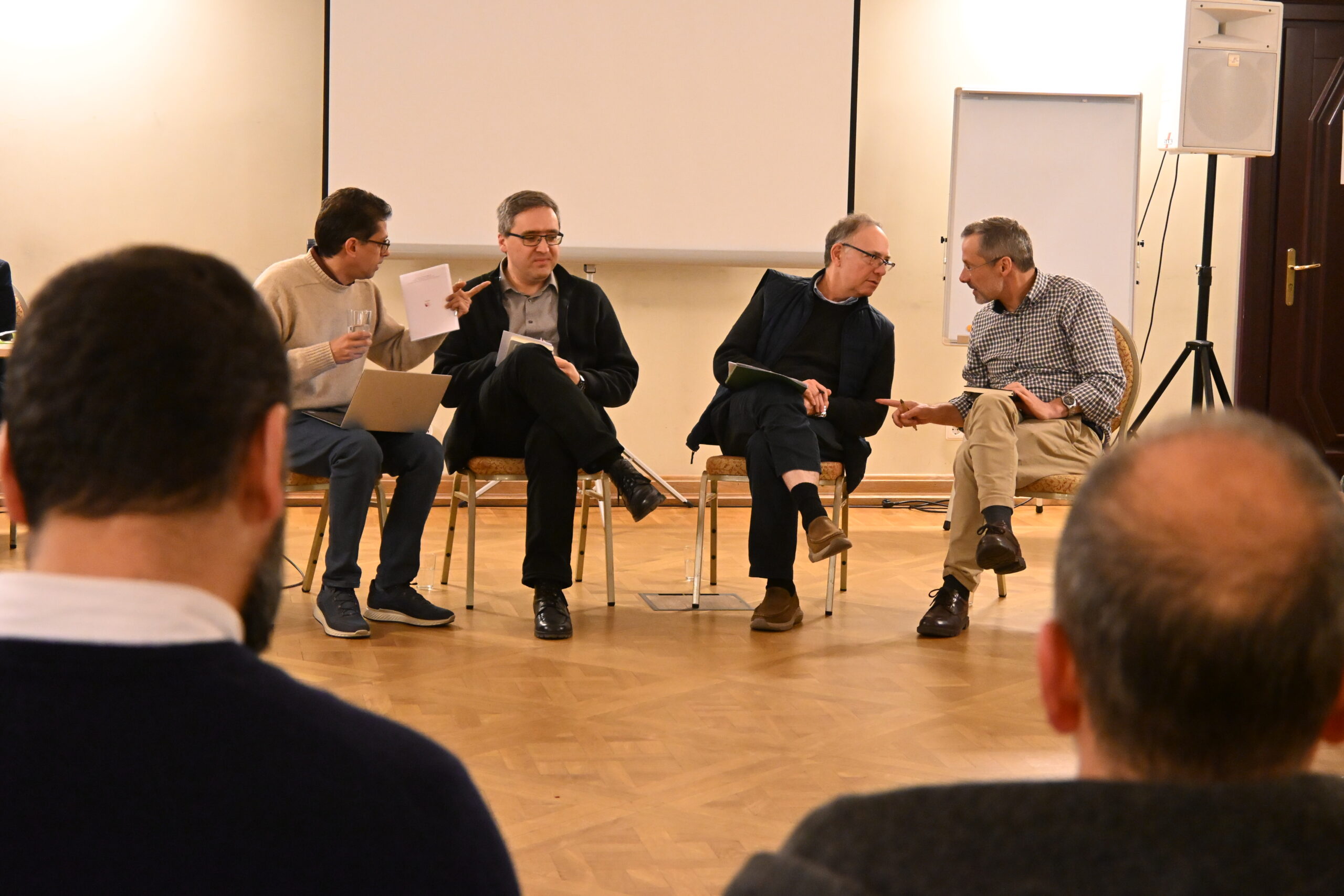
Discerning Foresight Workshop
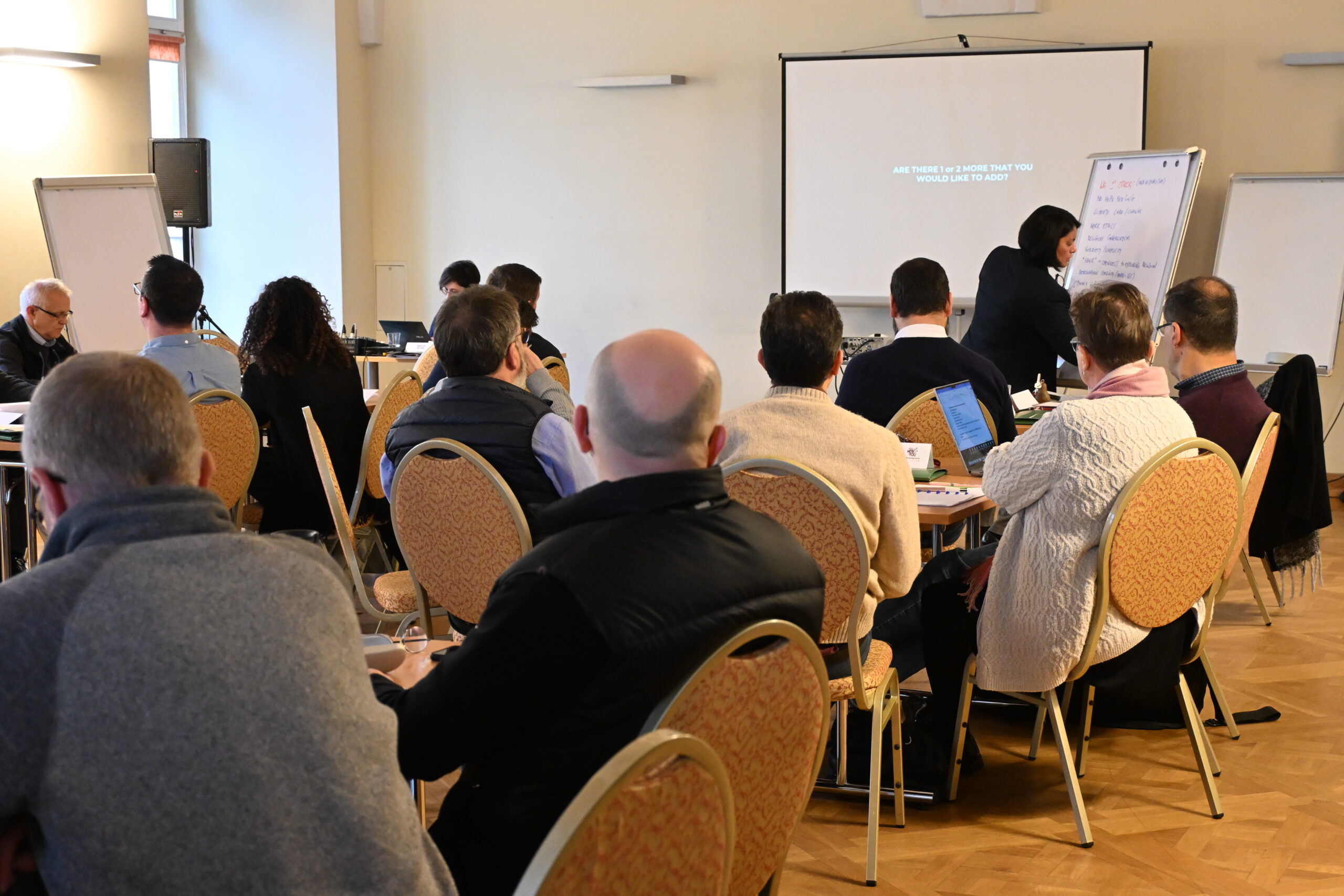
The next morning, Ms. Marine Irvine from the Ateneo Research Institute for the Futures of Education (RIFE) led us through a two-day Discerning Foresight workshop – a pioneering approach integrating Strategic Foresight with Ignatian Discernment. Presented with the main forces of change in education, we reflected on their meaning and effects, even identifying other forces within our educational contexts. For each force, we imagined how they would impact our schools if their development followed positive, negative, or business-as-usual trajectories. We agreed on five main forces of change: the ubiquity of AI; social media’s erosion of truth, trust, and tact; socio-environmental crisis; rise of religious and spiritual exploration; and persistent teacher shortage.
As night and snow fell, we left the future on hold to hear from Fr. Dalibor Renić SJ (President of the Conference of European Provincials), Fr. José Mesa SJ (Secretary for Education), and Fr. Filipe Martins SJ (Jesuit European Social Centre) who offered valuable insight into deepening mission and identity across different networks and contexts.
Imagining Future Scenarios
The second workshop day began with a scenario building exercise. What would happen to Jesuit education if the identified forces of change impacted our contexts in predictable, disruptive, painful, or restrictive ways? Twenty years from now, how would we live, teach, and learn? How would we lead our schools? Driven by Ignatian imagination, and between laughter and concerns, we explored our darkest pessimisms and most naive optimisms – even using AI to develop them further. We prayed upon these scenarios and shared our feelings of consolation and desolation. Surprisingly, we were envisioning futures filled with hope, even when facing the darkest scenarios. “Jesuit schools will be a strength in that weird world,” someone shared, “because in a society longing for humanity, we can offer identity and community, a place to seek and find God. We strive to offer it now, and we can develop those efforts further”.
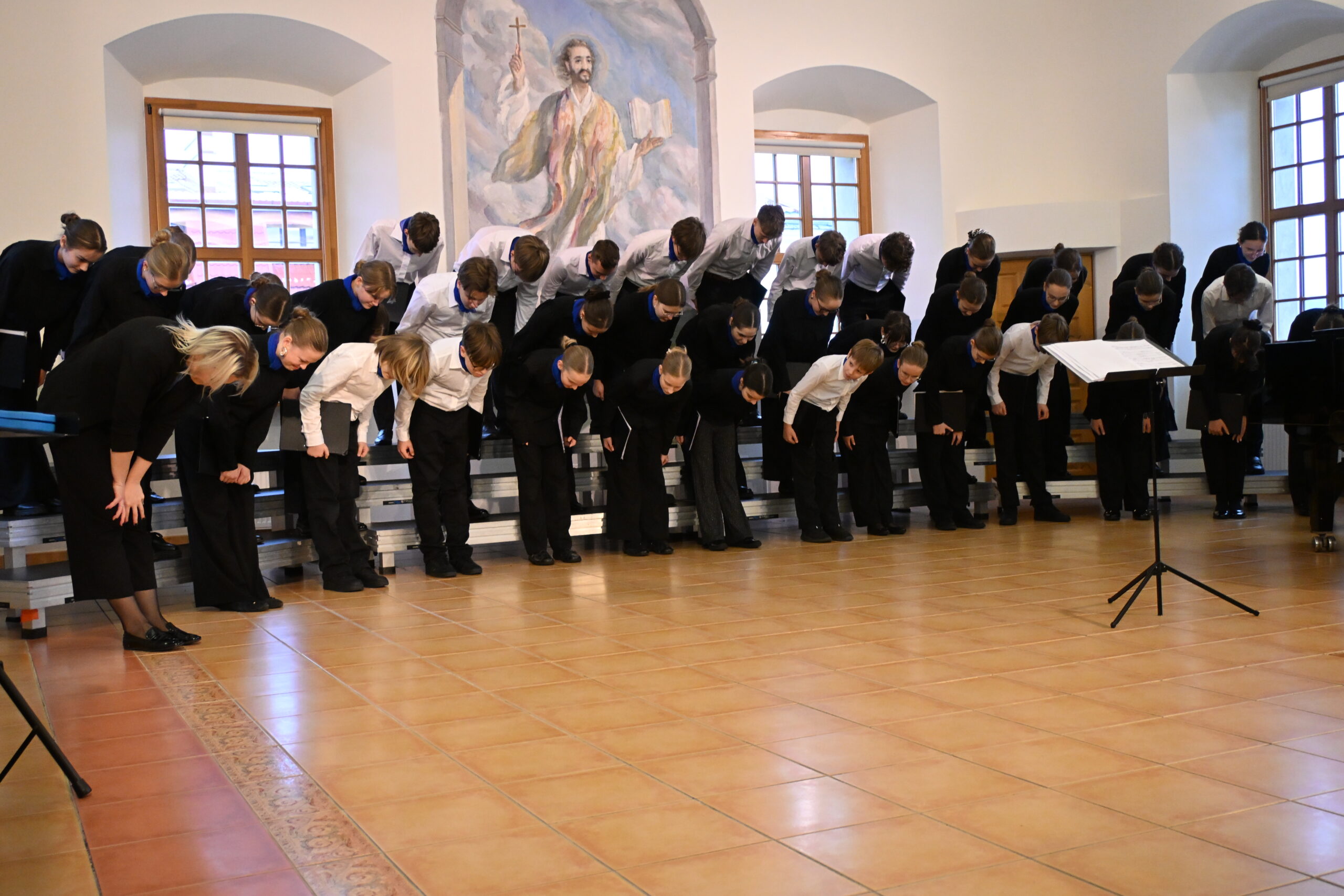
Students Leading the Way
The next morning showed us the future is already here. Students at the Jesuit school in Vilnius, the Vilniaus Jėzuitų Gimnazija, welcomed us with smiles and chocolates, leading us through their school like a friend welcome another at his home. The library and music studio were impressive, but we commented most on their sense of ownership: decorations, traditions, and even school renovations were possible through student willingness and hard work. Teachers appeared seldom in corridors – never as rulers or controllers, but as maestros. Which may also help to explain why the school choir sings so beautifully.
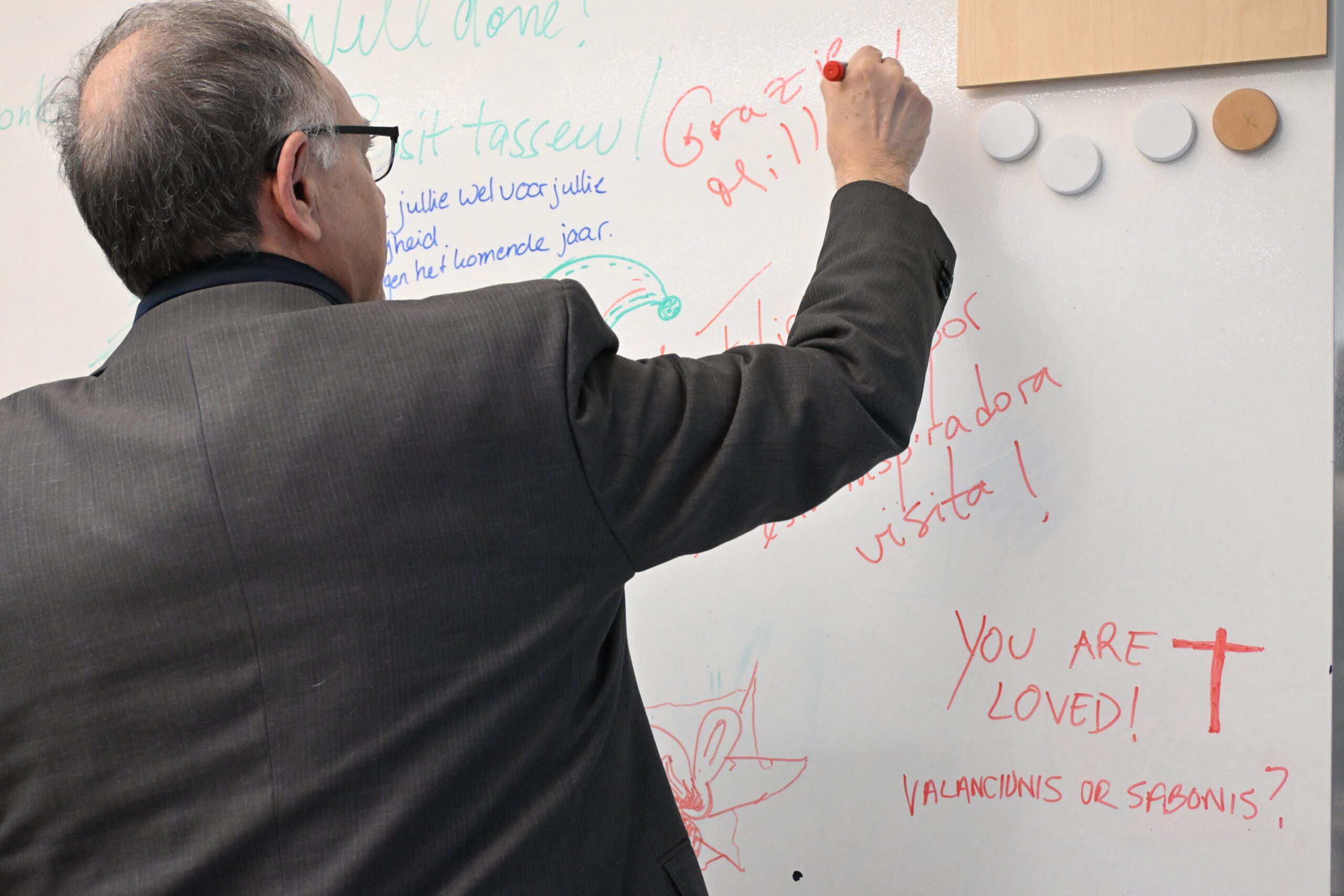
Gratitude and Goodbyes
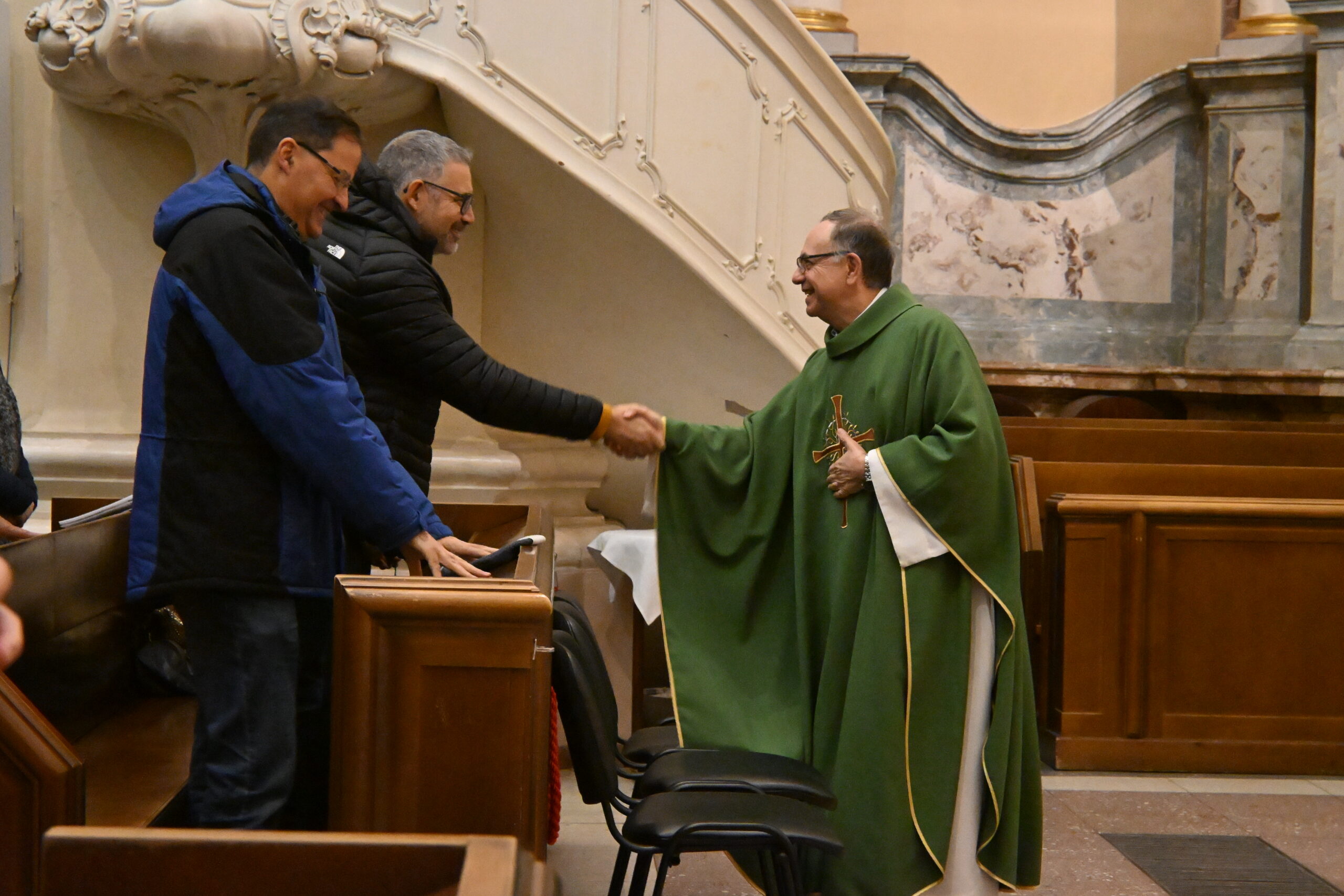
Approaching the week’s end, we gave thanks at the Eucharist, followed by a joyful dinner set at a different kind of table. We bid farewell to Fr. José Mesa SJ and thanked him for fifteen years as the Secretary for Education, and his dedication to the Jesuit Global Network of Schools, and education as whole.
Finally, in the last morning we gathered to discuss JECSE’s apostolic plan and strategy: the network’s role in supporting Education Delegates, future events, and better collaboration. Mr David Smith, Educate Magis Director, joined us in presenting new online tools available to all delegates.
A Future Not Our Own
At the Discerning Foresight workshop’s end, we prayed “Romero’s Prayer,” written by Cardinal Dearden in 1979. It begins: “Nothing we do is complete, which is a way of saying that the Kingdom always lies beyond us”. This echoes the futures we have imagined – honestly, at first it seems a bit disappointing. However, as the future requires God’s grace, the prayer needs follow up too. It continues: “We cannot do everything, and there is a sense of liberation in realizing that (…). We are workers, not master builders; ministers, not messiahs. We are prophets of a future not our own”.
This week, we reached the same realization as Ignatius and his first companions: we don’t know what the future holds, but that doesn’t mean we shouldn’t prepare for the mission ahead. For Ignatius, accepting God’s will meant acknowledging that “the whole world will be my Jerusalem”. For us today, answering our calling as Jesuit educators means rejoicing in a future not our own.